
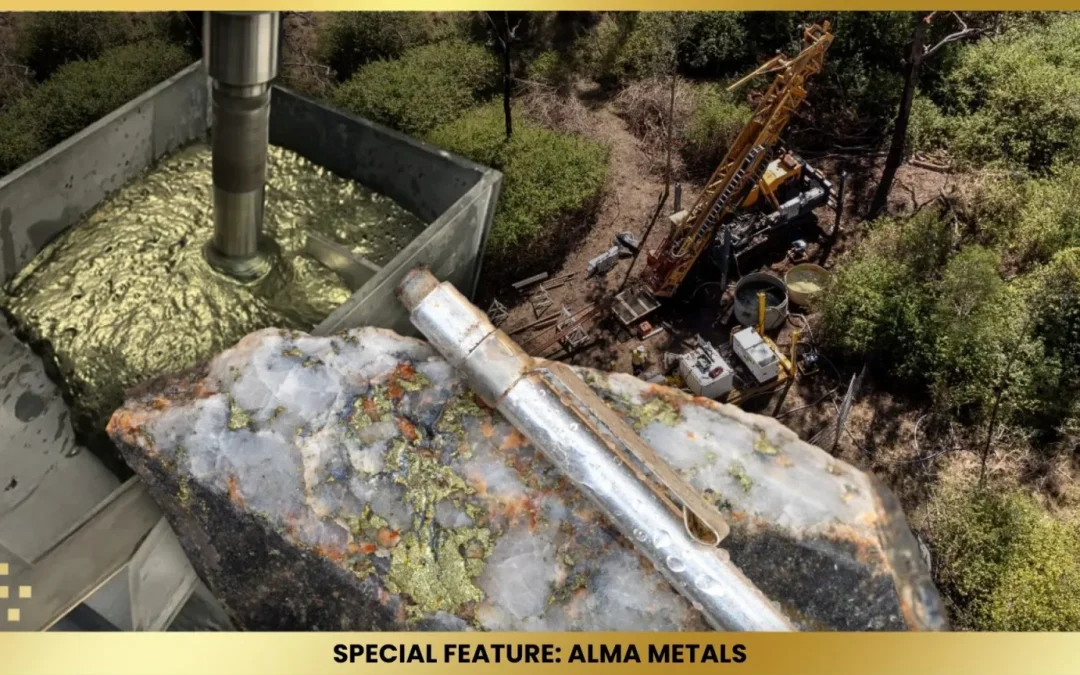
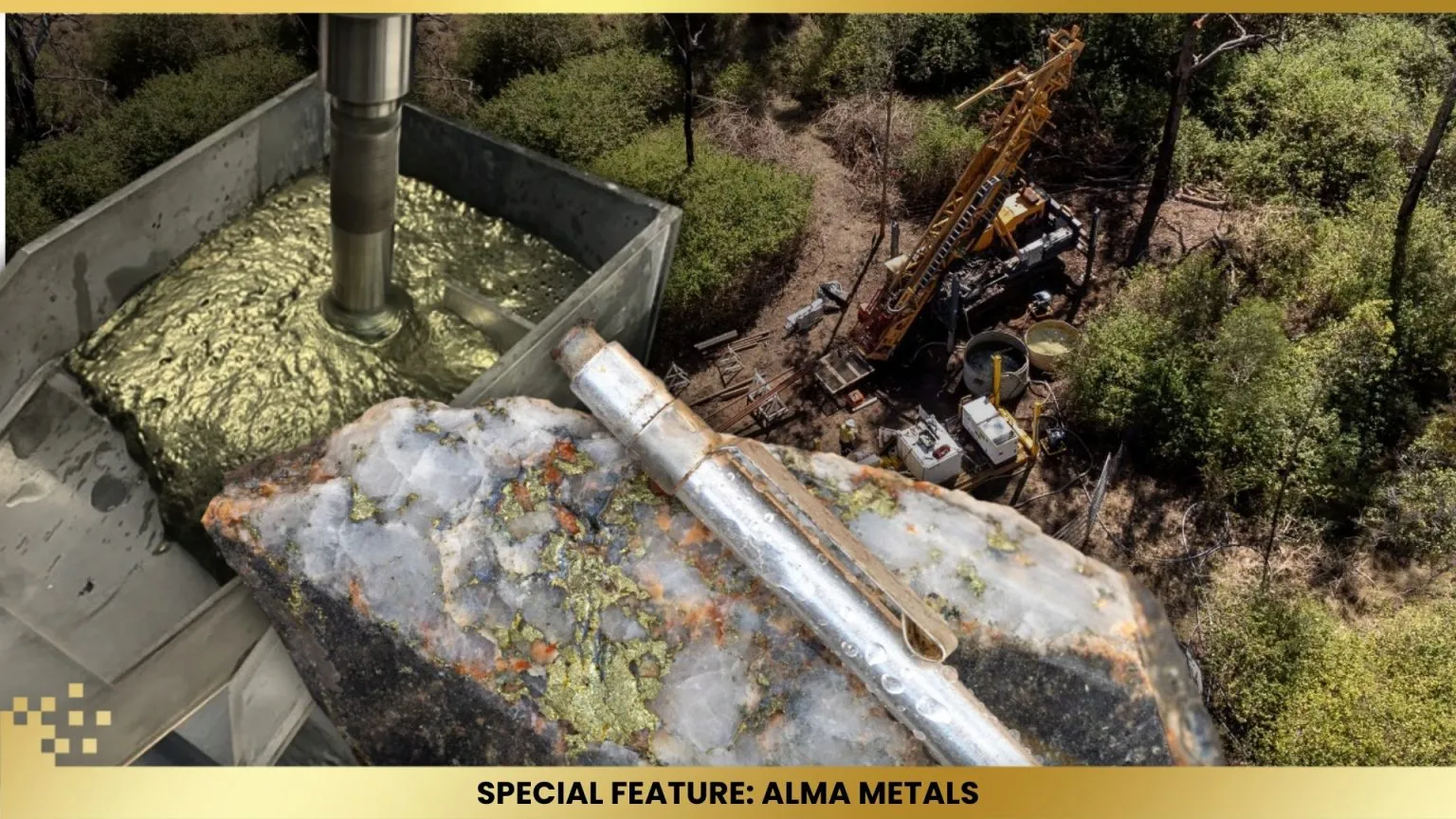
Alma Metals (ASX:ALM) is focused on unlocking the full potential of its Briggs Copper Project in Queensland and is progressing drilling to tap into what lies deep below the surface.
In April, the company received a $250,000 grant under the Queensland Government’s Collaborative Exploration Initiative (CEI) to drill to a depth of 900m through the entire mineralised system.
Managing Director Frazer Tabeart tells Mining.com.au success could reshape the company’s understanding of the Briggs system, potentially unlocking further scale and grade upside, and strengthening the development case for the project.
“The deep drill hole is designed to test a compelling versatile time domain electromagnetic (VTEM) geophysical anomaly located adjacent to the southwest side of the current mineral resource estimate,” he explains.
The anomaly was identified in 2015 during a VTEM survey commissioned by previous owner, Rio Tinto Exploration.
The aim of drilling is to probe the potential for a deeper, higher-grade mineralised system beneath the existing resource, which currently contains 2 million tonnes of copper and is the subject of a Scoping Study.
Alma believes the target may represent a different, previously undrilled phase of the Briggs felsic intrusive complex, potentially with higher grades.
This fresh round of drilling will also provide geological and geochemical vectors to support ongoing resource modelling and potential resource expansion as well as contribute to metallurgical and alteration studies.
The target is a resistivity low (conductive high) and may have higher copper and molybdenum grades that would have a material positive impact on project economics if confirmed.
Additionally, Alma is nearing completion of a Scoping Study, which is slated for release in the coming quarter.
The study is assessing the potential development of a large-scale, long-life open cut mine with conventional crushing, grinding and flotation processing to produce a marketable copper concentrate.
Scoping Study points to ‘robust’ economics
While the results are still pending for the Scoping Study, Tabeart says early findings suggest a “robust” open pit development scenario and high copper recoveries at coarse primary grind sizes.
Locked-cycle flotation testing has achieved copper recoveries of up to 95% into clean, high-grade concentrates containing as much as 29% copper, even when using coarse grinding sizes.
Tabeart says this is significant because coarse grinding reduces energy consumption, high recoveries maximise revenue potential, and clean concentrates enhance offtake appeal and reduce processing complexity.
Collectively, these advantages signal potentially lower unit operating costs and improved project economics.
Briggs also has infrastructure advantages due to its proximity to the Port of Gladstone, rail, power and gas, and no fatal flaws were identified in environmental desktop studies.
“These findings collectively support the project’s viability and competitiveness,” Tabeart notes.
The next steps to be taken in the environmental assessment include the commencement of baseline studies to support future permitting activities, engaging with stakeholders and regulators to align on development pathways and integrating environmental data into feasibility-level planning.
Briggs is a porphyry deposit, a large source of copper – accounting for over 60% of global supply, as well as other in-demand metals such as molybdenum, gold and silver.

In April, Alma increased the confidence of the resource and included the reporting of molybdenum and silver byproducts for the first time.
Drilling completed last year provided sufficient data density to update part of the resource to the indicated category to support a Scoping Study.
The updated resource also includes a small oxide resource that Alma believes may have “significant value” once further evaluation has been completed.
“The recent conversion of 25% of the Briggs resource into the indicated category is a major milestone,” Tabeart says.
“It enhances confidence in the deposit’s continuity and grade, and provides a stronger foundation for economic modelling and development planning within the Scoping Study framework.”
Byproducts enhance revenue and project appeal
Using a 0.15% copper cut-off grade, the resource now contains 2 million tonnes of copper, 73 million pounds of molybdenum and 16.5 million ounces of silver.
The upgraded resource, which was based on a total inventory of 12,009m of drilling across 58 holes, extends down from the surface.
The high tonnage of the indicated resource could potentially support a higher-grade starter pit with a low to very low strip ratio, according to Alma.
The inclusion of the molybdenum and silver has the ability to enhance project economics because of the potential additional revenue generated from the sale of these metals.
Metallurgical testwork resulted in recoveries of up to 73% molybdenum with up to 3,200ppm molybdenum in concentrates, while payable levels of silver graded at up to 72g/t silver in concentrates.
Tabeart says there is broader market appeal for multi-metal concentrates from buyers, and the company’s strategy aligns with current critical minerals demand.
Heading into the latter part of the year, Alma expects to release the results of the Scoping Study and the assays from the CEI-funded deep drill hole.

Alma raised $1.06 million in late June to enable it to reach these milestones, but has mapped out further plans for the next six to 12 months, which it plans to seek additional funds for. This includes follow-up drilling campaigns targeting higher grades and increased resource confidence.
To continue evolving the resource during that time, the company will incorporate new drilling data – including the deep hole, investigate potential expansion into adjacent zones, upgrade more of the inferred material into the higher confidence indicated category and refine the geological and metallurgical domain modelling.
“These updates will feed into future economic studies and development planning,” Tabeart says.
“Briggs is emerging as one of Australia’s most strategically positioned copper projects, combining scale, infrastructure access, and growing technical momentum, at a time when developing a large-scale asset in a tier-one jurisdiction has never been more compelling.
“Alma Metals is focused on unlocking its full potential through disciplined exploration, transparent communication, and proactive engagement with investors and partners.”